Candylocks Hair Salon
- 4.1
- Rating
- 10.00M
- Installs
- Free
- Price

 Analysis by App-foxy
I went into Candylocks Hair Salon expecting a simple dress-up game, but its appeal is more specific than that. It is a child-friendly salon game where the main pleasure comes from making small visual choices, seeing the doll change immediately, and then trying a different look when the first one is finished. The experience is gentle, colorful, and easy to understand, which makes it a natural fit for younger players who enjoy hair, clothes, makeup, and decorating more than competition or complicated rules.
At its heart, this is an educational game from TutoTOONS, although the learning is informal rather than lesson-based. I would describe it as practice in sequencing, visual decision-making, and creative expression. You choose an action, watch the result, decide whether it works, and continue shaping the character. That simple rhythm is the reason the game can hold attention for a while without needing a difficult challenge.
How the salon loop feels in actual play
I find the salon loop most satisfying when I give each makeover a small plan instead of tapping through every option at random. Starting with either the hair or the outfit gives the rest of the choices a useful direction, and finishing with the salon helps the result feel complete. That approach also makes it easier to pause after one project, which leads naturally to the practical checks that can help if play does not get going smoothly.
You May Also Like

 Blood Strike: 2.5 Anniversary
Blood Strike’s Loadouts Turn Every Drop Into a Tactical Gamble
A close look at Blood Strike’s custom loadouts: how fast access to signature weapons reshapes its battle royale rhythm, rewards preparation, and narrows the gap between fights.

 Pandora - Music & Podcasts
Pandora’s Music Is Easy to Start, but Harder to Recover
Pandora’s strength is its low-effort path from a seed to a station. Its weak spot is how much confidence it asks you to place in connection, setup, and quiet recovery.

 8 Ball Pool
 Is Built on Rivalries, Rematches, and Routine
A close look at the rivalries, rematches, shared routines, and unanswered safety questions that turn a quick pool match into a persistent mobile community.

 Samsung Music
’s Quiet Strength Is Playing What You Already Own
Its reach comes less from spectacle than from dependable access to a personal library. That simplicity is both the app’s strongest retention engine and its ceiling.

 AccuWeather: Weather Radar
AccuWeather Review: A Quick, Clear Forecast for Everyday Decisions
For everyday plans, the best forecast is the one you can understand quickly. AccuWeather makes rain timing, radar, and local conditions easy to act on, with a few trade-offs.

 Hill Climb Racing
Why Hill Climb Racing Still Turns Crashes Into One More Run
A tiny car, a bumpy hill and one more upgrade: Hill Climb Racing keeps resurfacing because its simple chaos makes every near-miss feel personal.
More From Our News Desk



The first action is deliberately easy
The strongest part of the opening experience is how quickly I can begin doing something useful. Instead of asking me to understand a long explanation, the game places the focus on the doll and the salon-style choices. Hair is the obvious starting point, but the wider appeal comes from treating the character as a complete makeover project rather than a single hairstyle screen.
That matters for children who may not have the patience for a traditional game tutorial. A young player can begin with a visible change, understand that the selected action affects the doll, and then move naturally toward the next choice. The controls feel suited to short taps and simple gestures, so the barrier between “I want to play” and “I am already playing” is low.
I also like that the first decision is not presented as a permanent commitment. A child can experiment without feeling that one wrong choice has ruined the character. That makes the salon feel more like a creative workspace than a test with a correct answer.
Every choice gives immediate visual feedback
The feedback rhythm is the real engine of the game. I make a change to the hair, outfit, makeup, or surroundings, and the screen responds with a new visual result. That instant response is more important here than a score because it tells the player, clearly and pleasantly, that the action mattered.
This creates a dependable sequence: choose an item or salon action, see the doll change, judge the look, and make another decision. Younger players can follow that pattern without needing to read much. Older children may enjoy it as a way to test combinations, especially when they are trying to make the hairstyle and outfit feel like they belong together.
The feedback is also useful for parents thinking about whether this is genuinely educational. It does not teach through quizzes or formal explanations. Instead, it gives children repeated opportunities to compare colors, shapes, and styles. The learning value is in the process of making a choice and evaluating the result.
Why the reward is the finished look
The reward structure is visual rather than competitive. A successful moment is not necessarily a high score; it is the satisfaction of seeing a doll become more personal. Collecting dolls, styling hair and outfits, applying sweet makeup, and decorating the salon all contribute to that sense of completion.
I found this more relaxing than games that constantly push points, timers, or rankings. The player can focus on the look in front of them instead of worrying about losing a round. For a child who wants a calm activity after school, that is a meaningful strength. The game gives a reason to continue without turning every decision into pressure.
There is also a useful creative trade-off here. Because the reward is mainly aesthetic, the game works best for children who already enjoy appearance-based play. A child looking for puzzles, building systems, or a story with major plot developments may find the reward too light. The same simplicity that makes the salon welcoming can make it feel limited to players who need deeper goals.
The reset is what makes another session tempting
Once a look feels finished, the experience does not need a dramatic ending. The natural reset is simply the thought that another doll, hairstyle, outfit, or decoration could produce a different result. That is why the game can work in short bursts: a player can complete one small makeover and stop, or continue experimenting when a new idea appears.
I see this as a better fit for occasional play than for a long uninterrupted session. A child might open it while waiting for dinner, create a look, close the game, and return later with a different style in mind. The loop is complete enough to feel satisfying, but open-ended enough to invite another attempt.
Parents should still set their own boundaries around screen time. The gentle design does not automatically make unlimited play a good idea. Because the game is built around repeated visual choices, a child may keep returning simply because the next combination is easy to imagine. A clear stopping point, such as finishing one doll or one salon makeover, can make the experience easier to manage.
What the collection adds to the routine
The collecting element gives the loop more structure than a single makeover tool. Each doll can become a separate creative project, and that changes the way I approach the salon. Instead of repeating exactly the same steps, I can treat each character as an opportunity to try a different mood or visual theme.
A practical way to use this is to give each session a small goal. One time, I might concentrate on the hair and choose the outfit afterward. Another time, I might start with clothing and use the hairstyle to match it. A third session can focus on makeup and salon decoration. This approach keeps the game from becoming a random sequence of taps and encourages more deliberate choices.
The collection also creates a natural stopping rule. When a child has completed a particular doll’s appearance, that is a reasonable moment to pause. Without a clear goal, dress-up games can blur into endless browsing, so using each doll as a finished project makes the activity feel more contained.
Hair styling is the clearest point of identity
Hair is where the game’s theme feels most distinctive. Outfit selection is familiar from many dress-up apps, but the salon framing gives the makeover a stronger starting point. I am not only choosing what a character wears; I am shaping the feature that defines the character’s overall look.
That makes the order of actions surprisingly important. If I choose a striking hairstyle first, the clothing decision becomes a matching exercise. If I select the outfit first, the hair can be used to balance it. This is one of the better ways to help a child notice relationships between separate visual elements without turning the activity into a formal lesson.
The limitation is that the game’s enjoyment depends heavily on whether the player likes this style of fantasy salon play. Someone who prefers action, exploration, or problem-solving will not get the same value from adjusting a doll’s appearance. I would not recommend it as a general-purpose game for every child; I would recommend it specifically to children drawn to dolls and creative styling.
Makeup and outfits broaden the choices
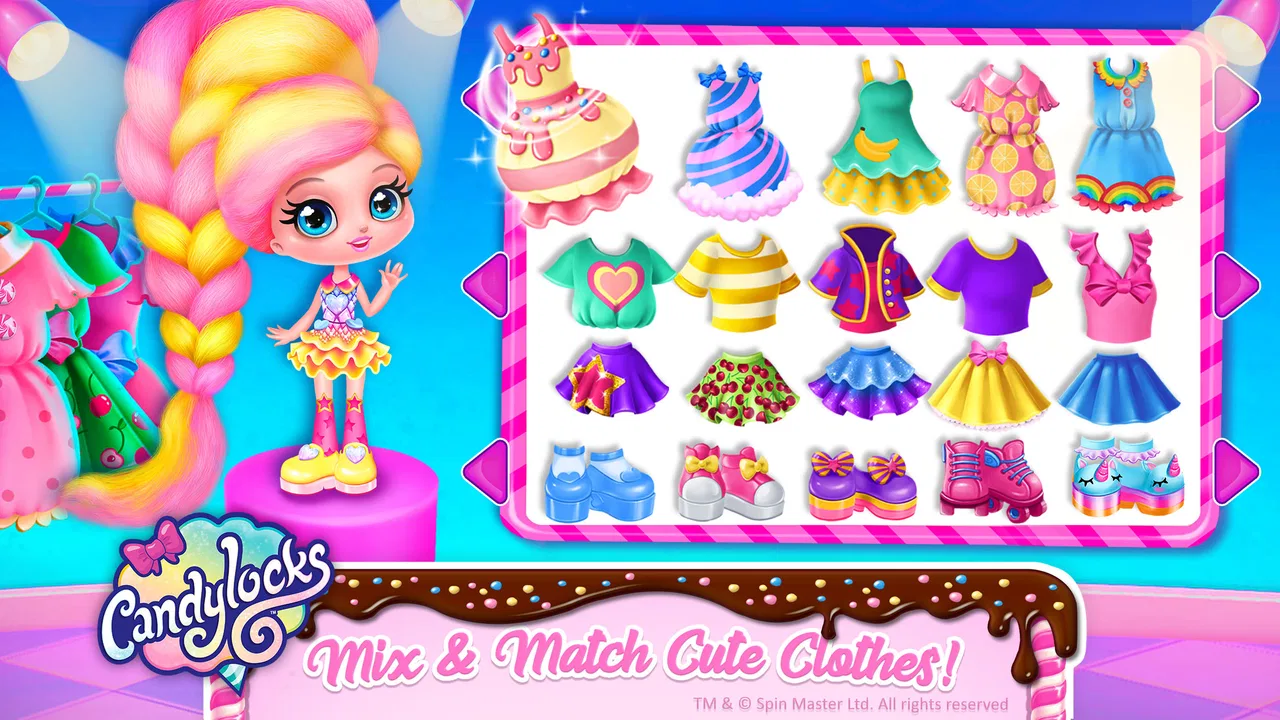
Makeup and clothing prevent the experience from being only about hair. They let the player refine a look after the main hairstyle has been chosen. I enjoy this second layer because it creates a reason to revisit an earlier decision: perhaps the hair looked fine on its own, but a different outfit changes what feels suitable.
For younger children, this can be a useful introduction to sequencing. They can begin with one visible change, add another, and then look at the complete result. The game does not require them to explain why a combination works, but it gives them repeated chances to notice that individual choices affect the whole character.
There is a trade-off in having many appearance decisions close together. A child may tap through options quickly without really comparing them. I get more from the game when I slow down and ask which choice fits the character best, rather than treating every item as something to collect immediately. That small change turns passive browsing into more thoughtful play.
Salon decoration makes the result feel complete
Decorating the salon is a worthwhile part of the loop because it shifts attention from the doll to the space around her. The character’s appearance is one project, while the salon becomes a second project that frames it. This gives the player another kind of creative control and makes the finished scene feel less like a character standing alone.
I would use this feature when a child has started losing interest in repeated styling. Moving from hair and clothes to the environment can refresh the session without requiring a completely different game. It also supports a useful distinction: the player is not only deciding who the doll looks like, but also what kind of place suits that look.
Still, decoration will not replace deeper building mechanics for children who want to construct complex spaces. The appeal is visual arrangement, not a long-term management system. That is perfectly acceptable for a light educational game, but it is worth understanding before choosing it as a main game rather than a casual creative activity.
Where it fits among children’s dress-up games
Compared with a conventional dress-up app, this game has a clearer salon identity. The hair and makeover theme gives the actions a setting, while the dolls and decorations make the result feel like a small collection of finished scenes. Compared with puzzle-focused educational games, it offers less measurable challenge and more freedom to experiment.
That difference helps define the right audience. If a child wants to practice spelling, arithmetic, memory, or logic, another educational title will be a better choice. If the child wants to combine visual items, create characters, and enjoy immediate changes without losing, this is a more suitable option.
I also prefer it to competitive alternatives for children who become frustrated by failure. There is no need to beat another player or protect a score in order to enjoy a makeover. On the other hand, children who need clear progression, increasingly difficult stages, or a strong story may find the open-ended format less motivating after the novelty fades.
Everyday use: a short, manageable creative break
A realistic use case is a child having a short quiet period between activities. They can open the salon, work on one doll, choose a hairstyle, coordinate an outfit, add makeup, and finish by adjusting the salon. The session has a beginning and an endpoint even though the game itself can continue with another character.
I would encourage an adult to turn that into a small creative prompt: choose a color mood, create a look for a particular occasion, or make the salon match the doll. The game does not need to supply a story for the child to invent one. This makes it more valuable as shared play, especially when an adult asks the child to describe the choices instead of simply watching the screen.
It can also work for independent play because the basic actions are easy to understand. The age rating is Everyone, and the game is free, which lowers the practical barrier for families who want to try it. The important expectation is that “free” describes the entry cost, not that every player will enjoy the same amount of content or repetition. I would test it with the child and observe whether the creative loop remains interesting after the first few makeovers.
Device expectations and version context
The game supports devices running Android 6.0 or later, and its current version is 1.2.115. That makes the minimum operating-system requirement relevant for families using an older phone or tablet. Before installing, I would check the device software rather than assume that every older Android device will handle it.
It has been available since August 21, 2019, so this is not a brand-new experiment in the category. Its continued presence is consistent with the straightforward appeal of the concept: dolls, styling, makeup, and decoration are easy to understand without a long backstory. TutoTOONS is the developer, and the game has reached over ten million installs, which suggests that the format has found a broad audience.
The average rating is 4.1 from around fifty-six thousand ratings, with roughly one thousand written reviews. I treat that as useful context rather than a substitute for personal testing. The numbers indicate substantial interest, but they do not change the central question: whether a particular child enjoys repeating visual makeovers more than playing games with stronger challenge or narrative.
Who should try it, and who should skip it
I would recommend it to younger children who like dolls, hair salons, colorful outfits, and creative customization. It is especially suitable when the goal is a calm, accessible activity with immediate feedback. It can also be a good shared-play choice because an adult and child can compare styling decisions without competing.
I would skip it for a child who asks for action, exploration, complex puzzles, or a story that develops from one stage to the next. I would also look elsewhere if the child quickly loses interest once a character has been styled. The game’s reset depends on wanting to try another combination, so its longevity is tied to that curiosity rather than to increasingly difficult gameplay.
For families comparing it with other educational games, the decision comes down to the kind of learning experience they want. This one supports creative sequencing and visual judgment through play. It is not the best tool for a specific academic skill, and I would not present it to a child as homework disguised as entertainment. Its value is strongest when creativity itself is the goal.
My verdict on the action-feedback-reward loop
The loop works because each part is easy to recognize. The action is a tap or selection that changes the doll or salon. The feedback is immediate and visual. The reward is a finished look and the pleasure of making it personal. The reset is the invitation to style another doll or rethink the previous combination.
That structure is simple, but it is not empty. It gives children room to make choices without punishing them for unusual combinations, and it offers adults a practical way to turn a short game session into a conversation about colors, matching, and personal taste. The main weakness is the same as the main strength: there is little pressure and little complexity, so children seeking a more demanding game may move on quickly.
My final view is that Candylocks Hair Salon is best treated as a focused creative activity rather than a complete educational curriculum or a deep simulation. I would install it for a child who enjoys makeover play and wants a friendly place to experiment. I would keep sessions purposeful, use the dolls as small projects, and choose another category when the child needs challenge, story, or academic practice. For the right player, the modest loop is exactly what makes another session feel inviting.
FAQs for Candylocks Hair Salon
01What is Candylocks Hair Salon about?
Candylocks Hair Salon is a fun and interactive game where players can create unique hairstyles using vibrant colors and various styling tools. The game is designed for users who enjoy creative and artistic activities, allowing them to experiment with different styles and designs in a virtual salon environment.
02Is Candylocks Hair Salon suitable for children?
Yes, Candylocks Hair Salon is designed with children in mind. It offers a safe and playful environment where kids can explore their creativity. The game features colorful graphics and easy-to-use controls, making it accessible and enjoyable for young users. Parents can feel comfortable knowing that the content is child-friendly.
03Does Candylocks Hair Salon require an internet connection?
Candylocks Hair Salon can be played offline, allowing users to enjoy the game without a constant internet connection. However, some features, such as updates or additional downloadable content, may require an internet connection. Players can enjoy the core gameplay without worrying about connectivity issues.
04Are there in-app purchases in Candylocks Hair Salon?
Yes, Candylocks Hair Salon includes in-app purchases. These purchases can enhance the gameplay experience by unlocking additional styles, tools, and accessories. While the game can be enjoyed without spending money, some players may choose to purchase items to expand their creative options.
05What platforms is Candylocks Hair Salon available on?
Candylocks Hair Salon is available for download on both Android and iOS platforms. Users can find the game on the Google Play Store and the Apple App Store. This ensures that the game is accessible to a wide range of mobile users, regardless of their device preference.
Pros
- Colorful and engaging graphics.
- Intuitive controls for all ages.
- Variety of hairstyles to create.
- Regular updates with new content.
- No in-app purchases required.
Cons
- Limited character customization.
- Repetitive gameplay mechanics.
- Ads can be intrusive at times.
- Requires internet connection.
- Lacks advanced styling options.

Candylocks Hair Salon
Gallery